What to Look For in a Leading Pilates Studio (and what I’d personally walk away from)
A good Pilates studio doesn’t just teach exercises. It runs a system: training standards, equipment upkeep, safety checks, and a culture that keeps you showing up when motivation dips.
And yes, vibes matter. But vibes without rigor? That’s how people get hurt, plateau, or quietly quit.
One line I live by:
A studio can be friendly and still be sloppy.
Certified instructors: proof beats charisma
Look, some instructors are naturally magnetic. Great voice, great playlist, great energy. None of that tells you if they’re competent when you show up with a cranky shoulder, hypermobile hips, or a history of back pain.
If you’re vetting credentials, don’t accept vague answers. You’re not being “high maintenance.” You’re doing basic due diligence. For a transparent example, check out this leading pilates studio in Geelong —they post instructor bios, certifications, and continuing-ed histories right on their site.
Six criteria I’d actually check
– Recognized Pilates certification that includes apparatus training (reformer, Cadillac/tower, chair), not only mat
– Training hours and structure: how many hours, what curriculum, and did it include supervised teaching (not just self-practice)
– Continuing education expectations (and whether they can name recent workshops without squinting into the distance)
– CPR/AED certification, current
– Insurance coverage (professional liability isn’t glamorous, but it’s a serious marker of professionalism)
– Scope and ethics clarity: can they explain what they do and what they don’t do (e.g., coaching movement patterns vs. treating medical conditions)
Now, this won’t apply to everyone, but… if a studio gets defensive when you ask about credentials, I’d take that as a signal.
A quick stat, because this gets fuzzy fast
The U.S. Pilates industry is largely unregulated, meaning “Pilates instructor” isn’t a protected title in most places. That’s why credential transparency matters. Source: Pilates Method Alliance (PMA), which has long advocated for industry standards and public education on teacher training and competency.
Also: observe one class before you buy a big package. You’ll learn more in 50 minutes than from a glossy “about us” page.
Hot take: spotless studios are rarely an accident
Cleanliness isn’t a perk. It’s a policy.
A “ready” Pilates studio has an almost boring consistency to it: the reformers glide smoothly, the mats don’t smell like yesterday’s sweat, and props aren’t tossed into a sad pile in the corner like an afterthought.
Here’s the thing: cleanliness also predicts how a studio handles safety. If they’re casual about wipe-downs, they may be casual about spring settings, contraindications, and screening too.
What I look for when I walk in (fast scan, 30 seconds):
– Sanitation stations that are easy to reach, not hidden like a secret
– Instructor-led cleaning habits between clients/classes (modeled behavior becomes member behavior)
– Equipment condition: straps intact, springs not rusty, footbars stable, carriage movement quiet and smooth
– Layout that reduces chaos: clear walkways, no tripping hazards, props organized logically
A studio doesn’t have to be fancy. It does need to be deliberately maintained.
Safety and alignment: this is the whole game
Pilates is alignment-heavy by design. That’s the point. So when studios market “burn” or “shake” but can’t explain pelvic positioning, rib mechanics, or shoulder centration… I get skeptical.
A strong studio runs safety like a checklist (because that’s how humans avoid predictable mistakes).
You should expect:
– Intake questions about injuries, pregnancies, surgeries, hypermobility, pain triggers
– Load management: spring selection and progression that makes sense, not random “spicy” settings
– Real scaling: regressions and progressions that keep you in control, not just alternative exercises that feel like punishment
– Hands-on corrections that are consensual and clearly explained (and yes, instructors should ask before touching you)
In my experience, the best instructors cue less than you’d think, but every cue lands. No word salad. No rambling anatomy lecture. Just crisp direction that changes your movement immediately.
One more thing: if you never hear breathing coached beyond “inhale, exhale,” you’re missing a major pillar. Breath is a load-management tool. It’s not background music.
Class variety isn’t “fun.” It’s progression.
Some studios treat variety like entertainment: new combos, new props, new trend of the month. That’s not what you want.
You want variety that organizes adaptation.
Rotating between mat, reformer, and small apparatus can be brilliant when it’s used to reinforce fundamentals in different contexts: trunk control, scapular stability, hip dissociation, gait mechanics, spinal articulation. Same principles, new demands.
A good programming ecosystem usually includes:
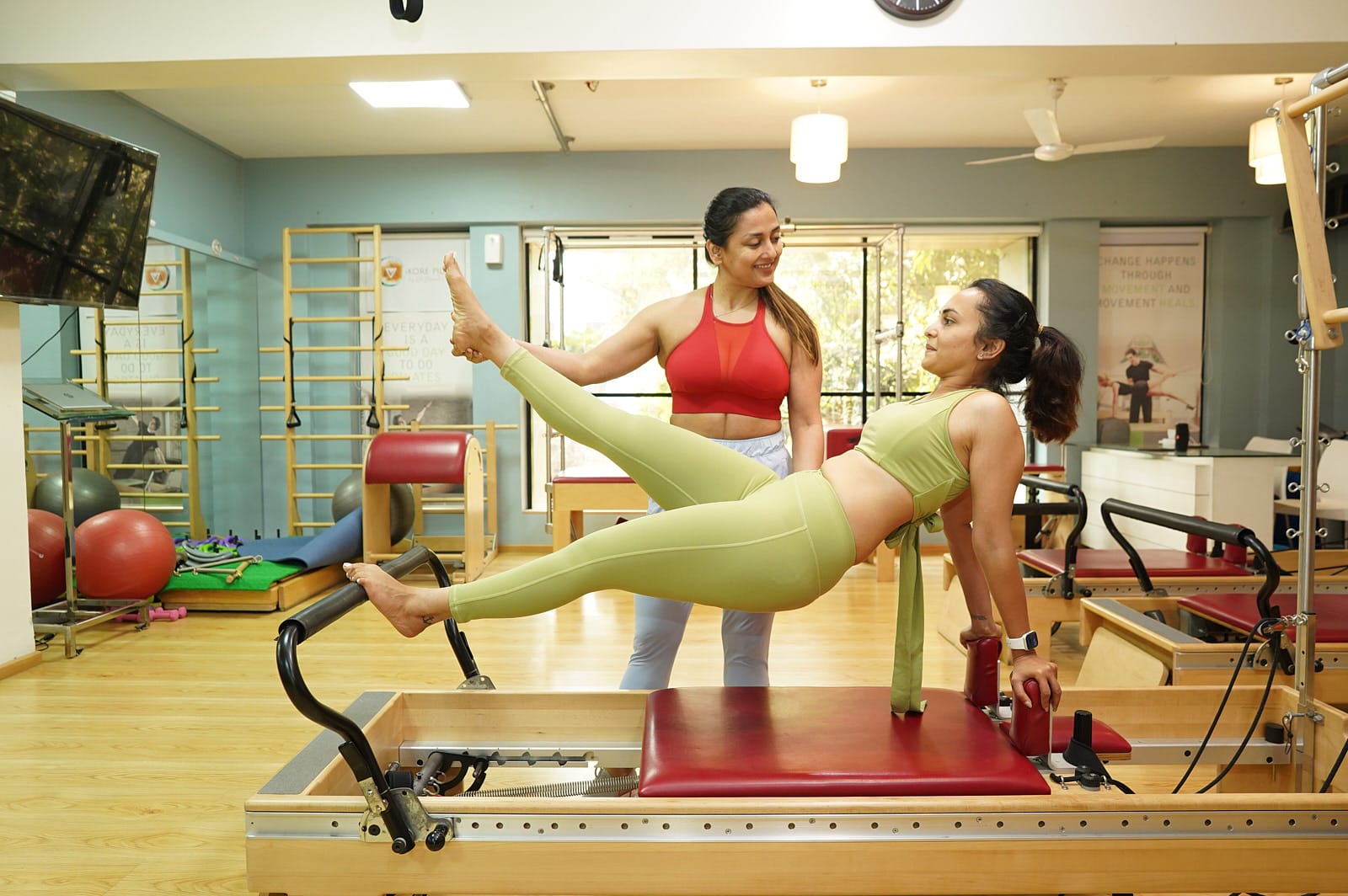
– Leveling that’s real (not “all levels” that secretly means intermediate)
– Different stimulus types: stability-focused sessions, strength-biased sessions, mobility/restore days
– Periodic reassessment: not formal exams, just quick check-ins so your plan doesn’t drift
Short section, but I’ll say it plainly: if every class feels exactly the same, you’ll plateau. If every class feels completely different, you’ll never build skill.
Culture & community: the stuff people underestimate (until it’s bad)
A studio can be technically excellent and still make you dread walking in. Cold front desk. Clique-y regulars. Instructors who play favorites. It adds friction, and friction kills consistency.
So yeah, assess the culture like you’re assessing the springs on a reformer: with your eyes open.
My 5-point culture check
1) Welcome factor: Do staff actually acknowledge you, or do you feel like you’re interrupting their day?
2) Communication quality: Are policies, pricing, cancellations, and waitlists clear, or weirdly vague?
3) Instruction consistency: Different personalities are fine. Wildly different standards are not.
4) Connection opportunities: Workshops, small groups, intro series, community classes (optional, not culty)
5) Accountability systems: thoughtful reminders, progress notes, goal check-ins, instructor continuity when possible
And a personal bias: I trust studios that respect autonomy. No pressure to “upgrade” constantly, no guilt tactics, no manipulative urgency. Just good teaching and clean systems.
A few quiet green flags people miss
Sometimes the best signs aren’t on the website.
– The instructor asks your permission before hands-on cues (every time, not only once)
– They can explain why they’re changing your setup in one sentence
– Springs and footbar settings are taught, not treated like secret knowledge
– The studio encourages beginners to start with foundations or private sessions (not thrown into the deep end)
– You see instructors taking sessions themselves (teachers who keep learning tend to stay sharp)
If those pillars line up credentials, cleanliness, safety systems, smart progression, and culture you’ve likely found a studio that can support you for years, not just a few enthusiastic weeks.